One of the most common questions investors ask is: «How should I allocate my ETF portfolio based on my age?» While there is no one-size-fits-all answer, age can serve as a useful starting point when determining how much risk to take and how to balance growth with stability.
Generally speaking, younger investors can afford to take more risk because they have decades to recover from market downturns. As investors approach retirement, preserving capital and reducing volatility become increasingly important. This is where asset allocation—the mix of stocks, bonds, and other investments in a portfolio—plays a critical role.
The good news is that ETFs make it easier than ever to build an age-appropriate portfolio. With just a few low-cost funds, investors can create a diversified strategy that evolves as their financial goals change over time.
Why Asset Allocation Matters More Than Stock Picking
Many investors spend countless hours searching for the next winning stock. However, research has consistently shown that asset allocation often has a greater impact on long-term portfolio performance than individual security selection.
A well-designed allocation helps investors:
- Manage risk
- Reduce portfolio volatility
- Stay invested during market downturns
- Achieve long-term financial goals
- Avoid emotional investing decisions
The right allocation can help smooth the investment journey, making it easier to remain disciplined during both bull and bear markets.
ETF Allocation in Your 20s
Investors in their 20s have one major advantage: time.
With decades before retirement, young investors can typically tolerate higher levels of market volatility in exchange for greater growth potential. Because they have a long investment horizon, short-term market declines are often less concerning.
A common allocation for investors in their 20s might be:
- 80% U.S. stocks
- 20% International stocks
- 0%–10% Bonds
Example ETFs:
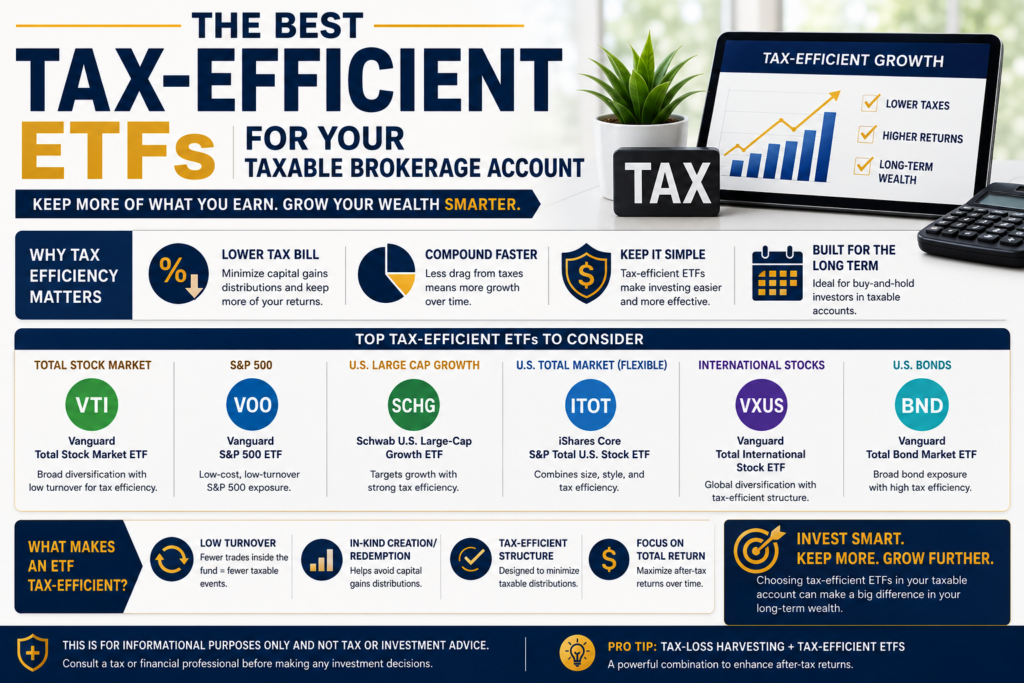
- Vanguard Total Stock Market ETF (VTI)
- Vanguard Total International Stock ETF (VXUS)
- Vanguard Total Bond Market ETF (BND)
Sample Portfolio
- 80% VTI
- 20% VXUS
This aggressive allocation prioritizes long-term growth and may be suitable for investors comfortable with market fluctuations.
ETF Allocation in Your 30s
By their 30s, many investors are balancing multiple financial goals, including homeownership, family expenses, and retirement savings.
Although growth remains important, adding a modest allocation to bonds can help reduce portfolio volatility.
A typical allocation might look like:
- 70% U.S. stocks
- 20% International stocks
- 10% Bonds
Sample Portfolio
- 70% VTI
- 20% VXUS
- 10% BND
This allocation continues to emphasize growth while introducing some stability.
ETF Allocation in Your 40s
Investors in their 40s often begin focusing more seriously on retirement planning.
While there may still be 20 or more years before retirement, preserving accumulated wealth becomes increasingly important.
A balanced allocation may include:
- 60% U.S. stocks
- 20% International stocks
- 20% Bonds
Sample Portfolio
- 60% VTI
- 20% VXUS
- 20% BND
This approach seeks to maintain growth potential while reducing the impact of major market declines.
ETF Allocation in Your 50s
As retirement approaches, many investors choose to further reduce risk.
The objective shifts from maximizing returns to balancing growth with capital preservation.
A common allocation may be:
- 50% U.S. stocks
- 20% International stocks
- 30% Bonds
Sample Portfolio
- 50% VTI
- 20% VXUS
- 30% BND
While stocks remain the primary growth engine, the larger bond allocation can help reduce volatility during market downturns.
ETF Allocation in Your 60s and Beyond
Retirees and near-retirees often prioritize income generation and portfolio stability.
Although maintaining some stock exposure remains important to combat inflation, many investors increase their bond holdings significantly.
A typical allocation may be:
- 40% U.S. stocks
- 20% International stocks
- 40% Bonds
Sample Portfolio
- 40% VTI
- 20% VXUS
- 40% BND
Some retirees may choose even higher bond allocations depending on their income needs and risk tolerance.
Should You Follow the «100 Minus Age» Rule?
One traditional guideline suggests subtracting your age from 100 to determine your stock allocation.
For example:
- Age 30 = 70% stocks
- Age 40 = 60% stocks
- Age 60 = 40% stocks
A more modern version uses:
- 110 minus age
- 120 minus age
This adjustment reflects longer life expectancies and the need for continued growth during retirement.
While these rules can provide a useful starting point, they should not replace a personalized assessment of your financial situation and risk tolerance.
The Role of International Stocks
Many investors underestimate the importance of international diversification.
Holding international ETFs such as Vanguard Total International Stock ETF (VXUS) provides exposure to companies outside the United States and reduces dependence on a single market.
A 15%–30% international allocation is common in many diversified portfolios.
Rebalancing Over Time
Asset allocation is not a one-time decision.
As markets move, your portfolio’s weightings will naturally shift. Periodic rebalancing helps restore your desired allocation and maintain your intended risk profile.
Most investors rebalance:
- Once per year
- Twice per year
- When allocations drift significantly from targets
Rebalancing can also be combined with age-based adjustments as retirement approaches.
A Simple Age-Based ETF Allocation Table
| Age Range | U.S. Stocks | International Stocks | Bonds |
|---|---|---|---|
| 20s | 80% | 20% | 0–10% |
| 30s | 70% | 20% | 10% |
| 40s | 60% | 20% | 20% |
| 50s | 50% | 20% | 30% |
| 60s+ | 40% | 20% | 40% |
These percentages are guidelines rather than strict rules and should be adjusted based on individual circumstances.
Final Thoughts
The best ETF allocation by age is ultimately the one you can stick with through both market highs and lows. While younger investors generally benefit from a more aggressive stock-heavy portfolio, older investors often prioritize stability and capital preservation.
Using broad-market ETFs such as Vanguard Total Stock Market ETF (VTI), Vanguard Total International Stock ETF (VXUS), and Vanguard Total Bond Market ETF (BND) makes it easy to build a diversified portfolio that evolves with your stage of life.
The most important factor is not finding the perfect allocation, but starting early, investing consistently, and maintaining a long-term perspective. Over time, those habits can have a far greater impact on your financial future than any single investment decision.