
Last updated: June 2026 | Reading time: 9 min
Disclaimer: This article is for informational and educational purposes only. Nothing here constitutes financial advice. Past performance is not a guarantee of future results. Always consult a licensed financial advisor before making investment decisions.
Why High Yield Is Not Always What It Seems
The words «high yield» in investing can mean two very different things. They can mean a fund that holds genuinely strong, cash-generating companies that return serious income to shareholders. Or they can mean a fund that chases the highest-yielding stocks on the market — which are often high-yielding precisely because the market does not trust the dividend to last.
In 2026, separating those two categories matters more than ever. With interest rates still elevated and equity valuations stretched in several sectors, understanding what you are actually buying inside a high-yield dividend ETF is the difference between building a reliable income stream and watching your distributions quietly shrink over time.
This guide covers the best high-yield dividend ETFs available right now — ranked by real-world usefulness, not just the headline number on the yield column.
What Makes a Good High-Yield Dividend ETF
Before diving into specific funds, it helps to agree on what «good» actually means in this context. A high headline yield that comes from declining share prices is not income — it is a warning sign. The metrics that matter when evaluating a dividend ETF are the distribution yield over the trailing twelve months, the expense ratio, assets under management as a proxy for liquidity and stability, the consistency of past dividend payments, and whether dividends have been growing or shrinking over time.
The funds below score well across most of these dimensions, each in a different way. None of them is perfect for every investor, which is why understanding the trade-offs is more useful than a simple ranking.
SCHD — Schwab U.S. Dividend Equity ETF
Yield (TTM): ~3.6% · Expense Ratio: 0.06% · AUM: ~$65 billion · Payout: Quarterly
SCHD is the benchmark that every other dividend ETF gets compared to, and for good reason. It does not simply select the highest-yielding stocks — it screens for companies with at least ten consecutive years of dividend payments, strong cash-flow coverage ratios, and healthy fundamentals. The result is a fund where the yield is supported by real earnings, not financial engineering.
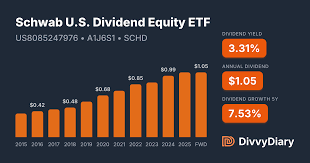
The dividend growth record is what sets SCHD apart. Over the past decade, its distribution has grown at roughly 12% per year on average, meaning an investor who bought shares five years ago is now earning a significantly higher yield on their original investment than the current advertised rate suggests. That compounding effect is what makes SCHD a long-term income engine rather than just a current-yield vehicle.
The main limitation is low technology exposure. SCHD’s quality screens tend to exclude many tech companies that do not yet pay meaningful dividends, which can cause it to lag during tech-driven bull markets. Investors comfortable with that trade-off will find SCHD hard to beat as a core dividend holding.
VYM — Vanguard High Dividend Yield ETF
Yield (TTM): ~3.1% · Expense Ratio: 0.06% · AUM: ~$55 billion · Payout: Quarterly
Where SCHD focuses on quality and growth, VYM focuses on breadth. It tracks the FTSE High Dividend Yield Index and holds over 400 stocks across financials, consumer staples, healthcare, energy, and industrials — making it one of the most diversified dividend ETFs available at any price.
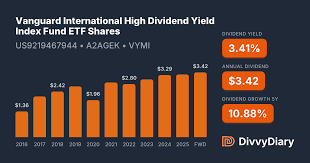
The yield is slightly below SCHD’s, and dividend growth has historically been slower. But the sheer number of holdings means VYM is genuinely resilient to single-stock blowups and sector-specific disruptions. Vanguard’s institutional credibility and near-zero fees make it a default choice for investors who want a simple, low-maintenance income position they can hold for decades.
VYM works particularly well as a complement to a growth-oriented portfolio, providing a steady income floor without requiring active management decisions.
DGRO — iShares Core Dividend Growth ETF
Yield (TTM): ~2.4% · Expense Ratio: 0.08% · AUM: ~$28 billion · Payout: Quarterly
DGRO has the lowest current yield of the funds in this guide, which is intentional. Its strategy prioritizes companies with strong earnings growth that are actively increasing their dividends — the idea being that today’s modest yield will become a significant yield in ten or fifteen years as those dividends compound upward.
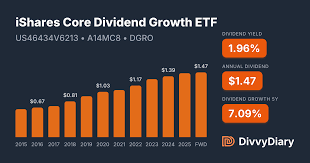
The fund includes meaningful technology exposure, which has contributed to stronger total returns in recent years even as its income component lags the other options here. For investors under forty who are in the accumulation phase and reinvesting dividends, DGRO’s profile often makes more sense than chasing a higher current yield.
Think of DGRO less as an income fund and more as a quality growth fund that happens to pay a growing dividend along the way.
JEPI — JPMorgan Equity Premium Income ETF
Yield (TTM): ~7.0–8.5% · Expense Ratio: 0.35% · AUM: ~$35 billion · Payout: Monthly
JEPI operates differently from every other fund on this list. It combines a portfolio of low-volatility U.S. large-cap equities with a covered call options strategy — selling call options on the S&P 500 to generate additional premium income, which gets paid out to investors every month. The result is a yield in the 7–9% range that arrives as a monthly distribution, which is why JEPI has become enormously popular with retirees and income-focused investors.
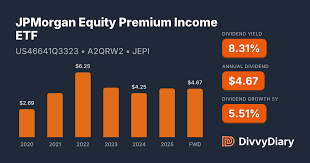
The trade-off is well understood among professional investors: because JEPI sells upside via options, it systematically caps its own gains during strong bull markets. In 2023 and 2024, when the S&P 500 surged, JEPI delivered much of the income but less of the capital appreciation. In sideways or mildly volatile markets, it tends to shine. Investors who need the monthly income and are less focused on total return growth will find JEPI genuinely useful. Those trying to grow capital over time should be cautious.
One additional note: a portion of JEPI’s distributions may be classified as non-qualified income for tax purposes, meaning it could be taxed at ordinary income rates rather than the lower qualified dividend rate. Holding JEPI inside a Roth IRA or traditional IRA sidesteps this issue entirely.
JEPQ — JPMorgan Nasdaq Equity Premium Income ETF
Yield (TTM): ~9.0–11% · Expense Ratio: 0.35% · AUM: ~$18 billion · Payout: Monthly
JEPQ applies the same covered-call strategy as JEPI but uses the Nasdaq 100 as its equity base. That means the underlying portfolio holds Apple, Microsoft, Nvidia, Alphabet, and Meta alongside dozens of other technology leaders. The result is a higher yield than JEPI — often in the 9–11% range — combined with significantly more exposure to the technology sector.
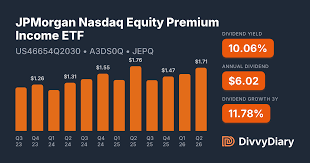
This makes JEPQ more volatile than JEPI on a day-to-day basis, but also gives it more potential upside when tech performs well. For investors who want to participate in the AI and technology wave while still collecting substantial monthly income, JEPQ offers a distinctive combination that few other ETFs replicate.
The same tax caveat applies as with JEPI: the options-derived income component may not qualify for preferential dividend tax rates, making tax-advantaged account placement an important consideration.
DVY — iShares Select Dividend ETF
Yield (TTM): ~4.5% · Expense Ratio: 0.38% · AUM: ~$14 billion · Payout: Quarterly
DVY targets the 100 highest-yielding U.S. stocks that have maintained consistent dividend payments for at least five years. This concentration on raw yield produces a distribution rate noticeably above SCHD or VYM, but it comes with a cost: the portfolio tilts heavily toward utilities, financials, and real estate — sectors that are inherently sensitive to interest rate movements.
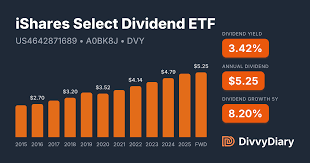
When rates are falling, DVY tends to perform very well. When rates are rising or staying high — as they have in the current environment — DVY can face headwinds both from declining sector valuations and from investor rotation toward bonds. It is worth watching the interest rate outlook carefully before adding a large position in DVY.
For investors specifically seeking the highest quarterly income from a traditional equity ETF and who understand the sector concentration involved, DVY delivers what it promises.
Which Fund Fits Which Investor
The honest answer is that most investors would be well served by one of the first three funds — SCHD, VYM, or DGRO — as a long-term core holding, with the choice depending on whether they prioritize current yield, maximum diversification, or dividend growth potential respectively.
JEPI and JEPQ serve a different need: investors who require meaningful monthly income right now and are prepared to trade some long-term upside to get it. A pairing of SCHD for long-term growth and JEPI for current income is a combination many investors use to balance both objectives simultaneously.
DVY fits a more specific scenario — an investor with significant capital who wants the highest possible quarterly distribution from U.S. equities and who is comfortable concentrating in rate-sensitive sectors.
Key Risks to Understand Before Investing
High-yield dividend ETFs carry real risks that the yield number does not communicate on its own. Dividend cuts are always possible, particularly during recessions, and funds that screen for quality like SCHD tend to be more resilient than those chasing raw yield. Interest rate sensitivity affects the defensive sectors where many high-yield funds concentrate. And the tax treatment of distributions varies significantly between traditional dividend ETFs and covered-call funds like JEPI and JEPQ.
Sector concentration is another factor often overlooked. Several funds on this list are heavily weighted toward financials, utilities, or energy — sectors that can face prolonged downturns that drag portfolio returns even when the broader market is performing well. Diversifying across two or three complementary funds reduces this risk substantially.
The Bottom Line
For most investors in 2026, SCHD remains the clearest starting point in the high-yield dividend space. Its combination of above-average current yield, minimal fees, and consistent dividend growth is the package that other funds struggle to match.Investors who also need strong monthly income today should look seriously at adding JEPI alongside it.
Whatever you choose, the principles are consistent: keep costs low, understand what the fund actually holds, pay attention to how distributions are taxed in your specific account type, and revisit your allocation at least once a year as yields and market conditions shift. (Remember, if you want to balance your high-yield strategy with the absolute gold standard of passive investing, you can deploy our asset-allocation blueprint directly from The Ultimate 3-ETF Portfolio for Beginners).
Frequently Asked Questions
What yield is considered high for a dividend ETF?
Any ETF yielding meaningfully above the S&P 500 average — which has hovered around 1.3–1.5% in recent years — qualifies as high yield. Funds like SCHD and VYM in the 3–4% range represent genuinely elevated yields from quality equities. JEPI and JEPQ, at 7–11%, use options strategies to reach a much higher level of income.
Are high-yield dividend ETFs safe?
They carry equity risk — their share prices can fall in market downturns, and distributions can be reduced or cut. Well-diversified ETFs from established issuers like Vanguard, Schwab, and iShares have strong long-term track records, but they are not equivalent to bonds or cash in terms of stability.
Should I hold dividend ETFs in a Roth IRA?
Holding dividend ETFs in a tax-advantaged account prevents you from paying income tax on distributions each year, which significantly improves long-term compounding. This is especially important for JEPI and JEPQ, where a portion of distributions may be taxed as ordinary income in a taxable account.
Can dividend ETF income replace a salary?
With sufficient capital, yes. At a blended 5% yield across a portfolio combining SCHD and JEPI, a $400,000 portfolio generates approximately $20,000 per year in distributions. The number scales with capital and yield, but the math only works at scale.
How often do dividend ETFs pay out?
SCHD, VYM, DGRO, and DVY all pay quarterly. JEPI and JEPQ pay monthly, which makes them particularly attractive for investors who use distributions to cover regular living expenses.